
Step 01
Sync open PRs
PR Tower ingests open pull requests via GitHub webhooks (real-time) and a configurable polling fallback. Every PR gets diff stats, labels, linked issues, and author context.
Prioritize · Recommend · Accelerate
Developers face a growing wall of pull requests every day. Without a way to distinguish high-value changes from low-risk housekeeping, teams burn review cycles on work that could wait - while the PRs that actually move the product forward sit in the queue. PR Tower fixes that.
The queue problem
What happens when review capacity stays human but pull request volume does not.
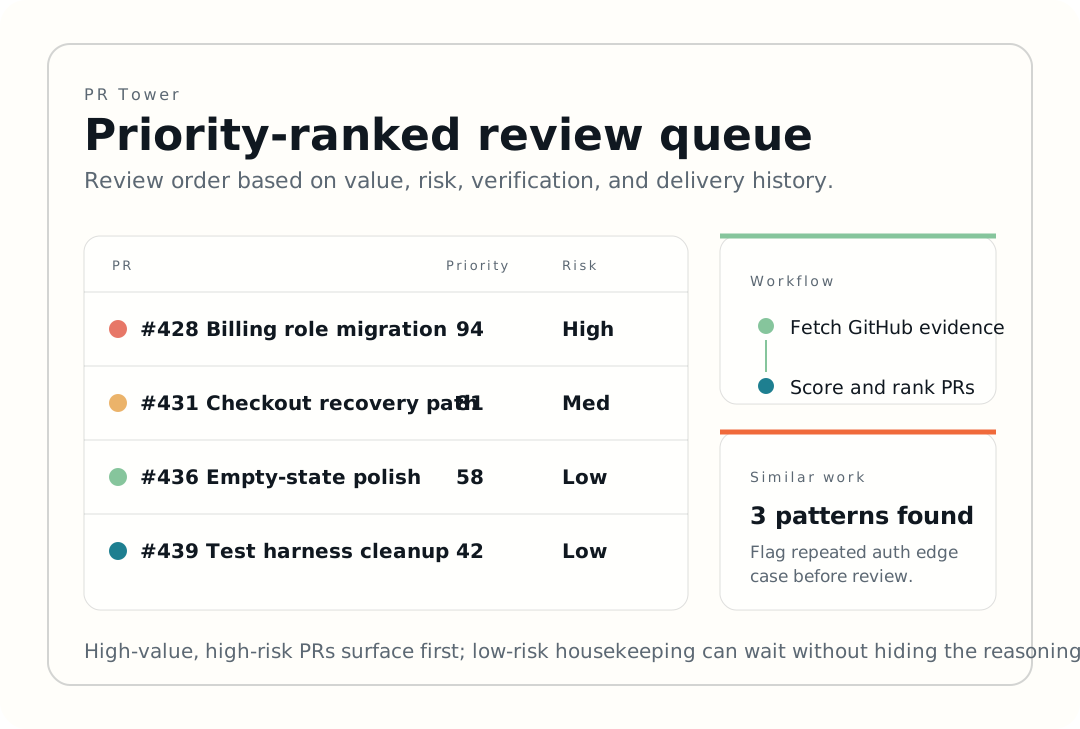
Visible scoring model
PR Tower explains why a change should be reviewed now, later, or in batch. Strategic value, customer impact, change-surface risk, and verification readiness stay visible so review order can be defended.
Size tagging from diff stats
Strategic alignment
How directly does this PR advance a current roadmap theme or customer commitment? High-alignment PRs move the product forward; low-alignment PRs are maintenance or speculative.
Customer impact
Does this change unblock a customer, close a gap in the funnel, or resolve a pain point with measurable demand signal?
Change-surface risk
How many files, modules, and service boundaries does this PR cross? Changes with high change-surface risk need faster, more careful review.
Verification readiness
Does the PR include tests, clear acceptance criteria, and a rollback path? Strong verification means safe, fast merges.
Two capabilities, one queue
PR Tower combines priority-ranked review queues with similar-work recommendations drawn from your team's delivery history - so reviewers spend time where it counts and catch known issues before a single comment is written.
Prioritize with PR Tower
PR Tower scores every open PR against strategic alignment, customer impact, change-surface risk, and verification readiness. Instead of reviewing in FIFO order, your team sees which pull requests will move the needle and which ones are safe to defer - so review effort goes where it matters most.
How this tower contributes to measurable improvement
PR Tower reduces review churn and merge friction on prioritized work.
Accelerate with Delivery Pilot
Delivery Pilot analyzes prior issues, historical PR comments, and past review threads to spot patterns the current PR might be missing. If similar changes previously triggered rework, missed edge cases, or drew repeat feedback, Pilot flags it before a human reviewer has to - accelerating and automating faster PR delivery of the right work.
How it works
Step 01
PR Tower ingests open pull requests via GitHub webhooks (real-time) and a configurable polling fallback. Every PR gets diff stats, labels, linked issues, and author context.
Step 02
Each PR is scored across strategic alignment, customer impact, change-surface risk, and verification readiness. The weighted composite produces a priority rank - not a black box number, but a visible breakdown.
Step 03
For each open PR, the system finds same-repo PRs with similar file paths, module overlap, or label matches. If those prior PRs triggered rework, missed edge cases, or drew repeated feedback, reviewers see it before repeating the cycle.
Step 04
Reviewers see a priority-ranked queue instead of a chronological list. High-value, high-risk PRs surface first. Low-risk housekeeping can be batched or deferred - with clear reasoning for each decision.
Human judgment preserved
Automated scoring is a starting point, not a final verdict. PR Tower gives reviewers one-click manual priority overrides for any PR - because sometimes the algorithm doesn't have the context that a human does. Pins persist until the PR is merged or closed.
Terse, actionable suggestions
Similar-work recommendations are delivered as short, terse checklists - not long-form analysis. Each item is a concrete thing to check, drawn from patterns in prior PRs. Teams that want more detail can expand, but the default is fast and scannable.
Unlinked PRs get assessed too
PRs without linked issues receive a PR-only assessment using diff metadata, labels, and file paths. The system also surfaces a “Create Issue” action so teams can retroactively connect the work to the backlog and improve future assessment accuracy.
Review capacity is the bottleneck
As AI agents produce more pull requests, review becomes the constraint. PR Tower ensures that limited human review capacity is spent on the changes that deliver the most value - and that similar-work history prevents the same feedback from being written twice.
What changes
Reviewers stop scanning an endless list and start with a ranked queue that reflects delivery value.
Known patterns from prior PRs surface automatically, before a human reviewer has to remember or discover them.
Low-risk housekeeping PRs get batched or deferred instead of consuming senior review time.