DT

DeliveryTower

Product delivery control tower

Control tower for product development

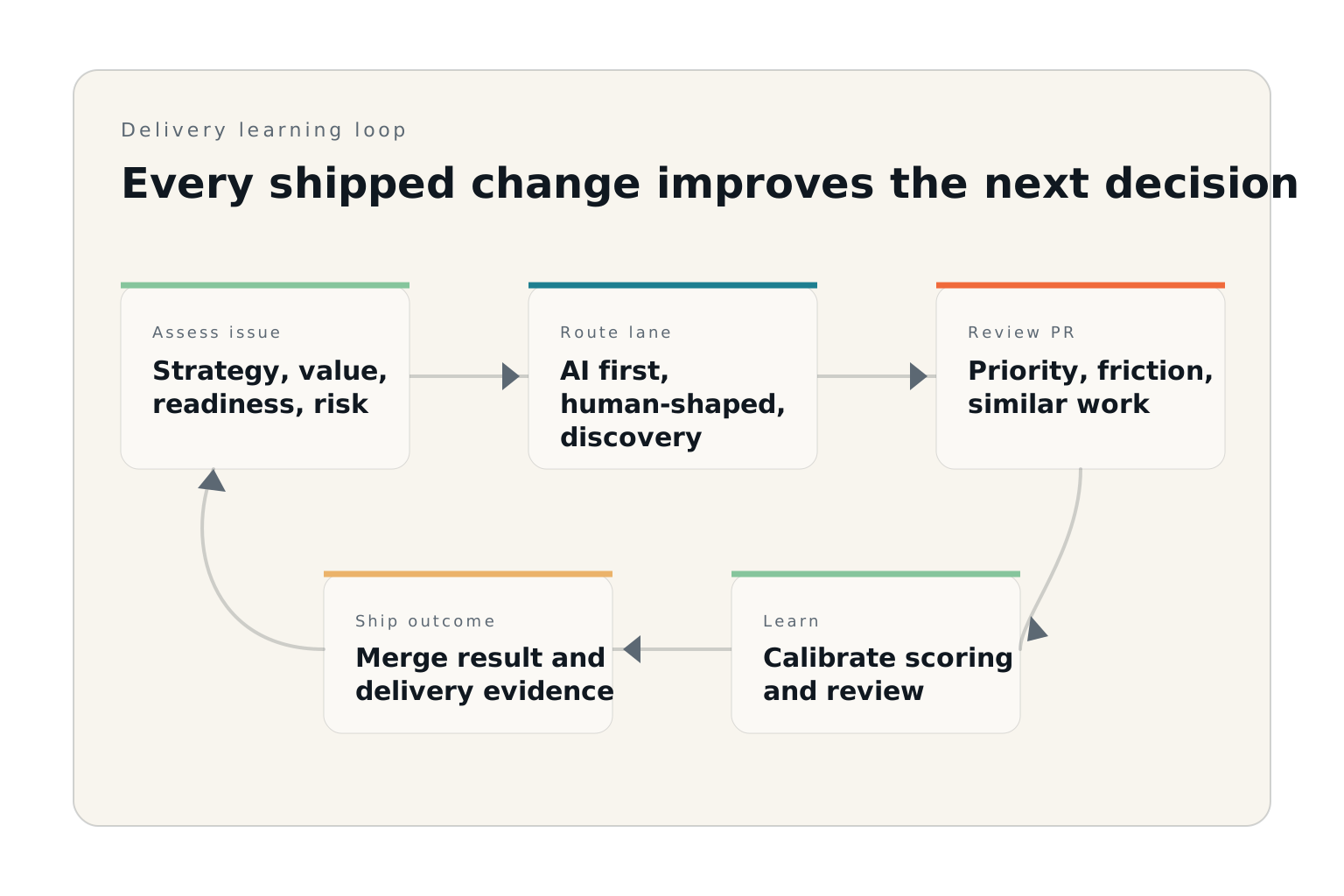
Assess the work. Route the change. Learn from the result.

The control tower for shipping the right product work with AI.

DeliveryTower turns backlog items into delivery-ready work packets. It reads customer and strategy context, checks verification strength and change risk, routes each item into the right execution lane, and gets sharper from delivery history.

Routing lanes

4

AI-first, hybrid, discovery, and human-led delivery.

Learned signals

12+

History from PRs, review rounds, regressions, and follow-on work.

Core promise

Less guesswork

More disciplined execution before the coding agent starts.

Tower board

Delivery readiness in motion

Live model
Strategy fitVerificationBlast radius

Similarity index

84%

Historical matches found across adjacent changes and review threads.

Verification strength

Strong

Existing tests, clear acceptance criteria, and visible rollback path.

AUTH-184

Enterprise SSO provisioning

Needs discovery

Security-sensitive area. Verification gaps still open.

WEB-216

Pricing page experiment

AI with guardrails

Clear scope, shallow blast radius, manual review required.

API-092

Audit export retention

Human review first

Cross-cutting data policy and compliance implications.

APP-331

Workspace invite reminders

AI ready

High historical similarity and strong acceptance criteria.

Flight log signals

PR review churnLow
Follow-on workModerate
Regression riskWatched

Inputs watched

Issues, PRs, incidents, customer demand

Primary output

A lane recommendation with reasons

Secondary output

An AI-ready brief that respects context

Operating model

DeliveryTower is not another issue board. It is a decision surface for product work.

The system exists to answer what should happen next: whether a change is aligned, understood, verifiable, safe for AI, and likely to stay safe after it ships.

Observe

Read the work in context, not in isolation.

Combine issue detail with roadmap themes, customer signals, code ownership, and known risk policies before anyone starts building.

Route

Send each change into the right execution lane.

DeliveryTower recommends AI-first, hybrid, discovery, or human-led execution based on clarity, verification strength, and blast radius.

Learn

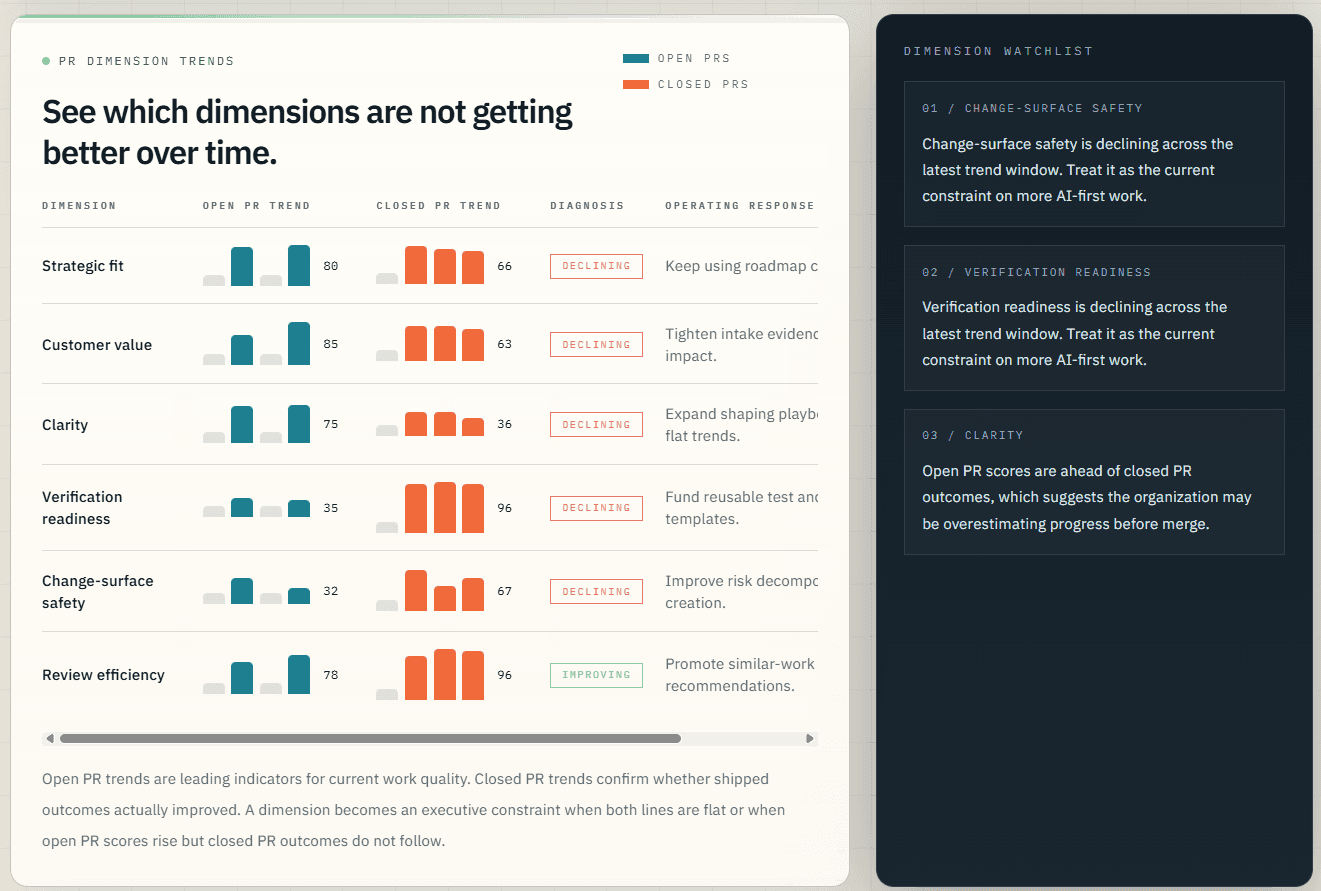
Turn delivery history into judgment.

Review friction, PR cycle time, regressions, and follow-on work become signals that sharpen future recommendations.

Signals watched

The tower learns from the work, not just the prompt.

DeliveryTower becomes credible when it can point to evidence: similar changes, review churn, regressions, test strength, and the cost of hidden work after merge.

Issue clarity and acceptance criteria
Roadmap themes and customer demand
Historical PR friction and review rounds
Files touched, cycle time, and rollback risk
Verification paths, test gaps, and observability
Follow-on work across docs, support, and rollout

Step 01

Assess readiness

Generate a structured brief, missing questions, and confidence-backed signals for every new item entering the backlog.

Step 02

Score the real constraints

Measure strategic fit, customer value, verification strength, change risk, and likely hidden work instead of relying on a single opaque score.

Step 03

Clear the right lane

Create AI-ready work packets for bounded changes, force discovery for ambiguous work, and escalate risky items to human review by design.

Step 04

Learn after merge

Track what really happened in PRs and releases so the system gets stricter, faster, and more useful over time.

Product frame

Built for teams that want AI leverage without giving up product judgment.

DeliveryTower sits above the coding agent. It helps teams decide what AI should build, what humans should shape first, and what the organization should learn from each delivery cycle.

Why it matters

Because abundant coding capacity does not remove the need for strategy, verification, and change discipline.

Because teams need a system that learns from what really caused churn, regressions, and surprise follow-on work.

Because better AI delivery starts with better work selection, not just faster implementation.